Conservatory and Orangery Roof Cleaning in Tunbridge Wells
Conservatories and orangeries are a common sight across Tunbridge Wells, added to everything from Victorian villas near Mount Ephraim to more modern homes out towards Pembury and Southborough. They bring in light and extend living space, but their glass or polycarbonate roofs sit in exactly the same damp, tree-covered environment as the main roof above them, and often need their own kind of attention. Moss removal Tunbridge Wells homeowners carry out on the main roof is only part of the picture when a conservatory or orangery is involved, since debris and growth from higher up frequently ends up washing straight onto the glass below.
This guide looks at what makes conservatory and orangery roofs different to clean, why they collect grime faster than many homeowners expect in this particular town, and how to approach the job safely without damaging glazing bars, seals, or polycarbonate panels.
The quick answer: conservatory and orangery roofs in Tunbridge Wells typically need a gentle clean two to three times a year, more often where a main roof or overhanging trees sit above them, using soft, non-abrasive methods rather than anything that could scratch glass or damage polycarbonate sheeting.
1. Why conservatory roofs are not the same job as a tiled roof
A tiled or slated roof is designed to be walked on carefully and cleaned with methods suited to a hard, textured surface. A conservatory or orangery roof is a different matter entirely. Glass panels, polycarbonate sheeting, and the seals and glazing bars that hold them together are far more delicate, and anything abrasive or high-pressure risks scratching the surface, damaging seals, or in the worst case cracking a panel. This is one of the main reasons conservatory roof cleaning is usually treated as a distinct task from general roof cleaning, even though the two areas often sit right next to each other on the same house.
Getting this wrong is not just cosmetic. A scratched polycarbonate panel loses clarity permanently, and damaged seals can let water into the conservatory structure, which is a far more expensive problem than the moss or grime that prompted the clean in the first place.
2. The conservatory and orangery styles common across Tunbridge Wells
Tunbridge Wells has a wide mix of housing, from the Victorian and Edwardian villas around Mount Ephraim and Mount Sion to more recent builds further out towards Pembury and Langton Green. Conservatories on the older, period properties are often glass-roofed, sometimes with a hipped or Victorian-style design that echoes the ornate detailing of the house itself. Orangeries, with their more solid, part-flat roof structure and lantern rooflight, have also become a popular addition on larger period homes in the area, offering a slightly different balance of light and enclosed space. Newer properties around the town more often feature simpler polycarbonate or tiled-effect conservatory roofs.
Each of these roof types collects dirt differently. Glass shows streaking and algae more visibly than polycarbonate, while lantern rooflights on orangeries have more joints and flat sections where debris can gather.
3. Why debris from the main roof ends up on the conservatory below
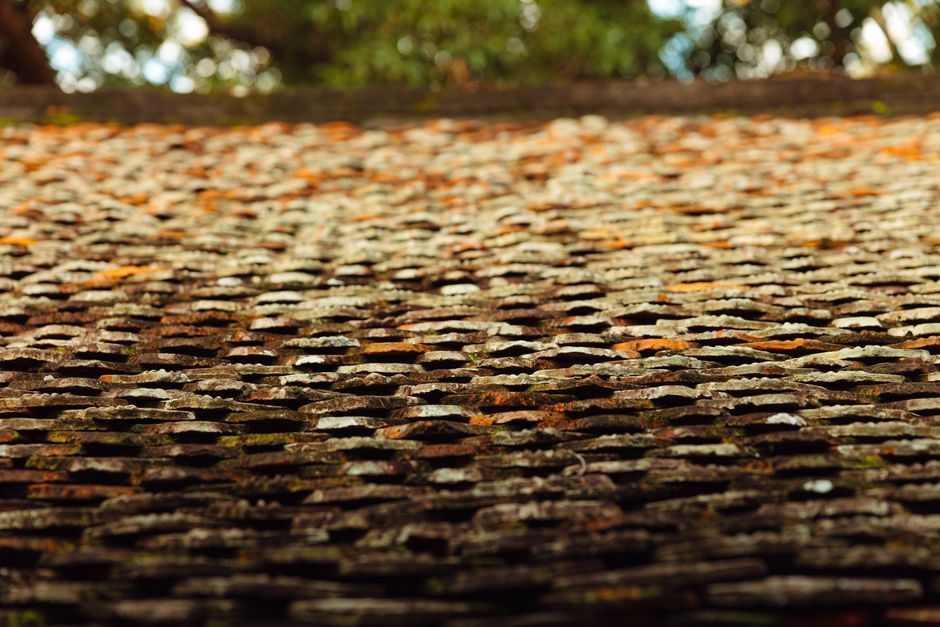
Many conservatories and orangeries in Tunbridge Wells are built against the rear of the house, often directly beneath a section of the main roof. This means moss, leaf litter, and grit washed down from tiled pitches during rain frequently lands on the conservatory roof below, adding to whatever has settled there directly from overhanging trees. Given how much woodland surrounds the town, from the Common through to the wooded lanes around Rusthall, this compounding effect is a genuine local factor rather than something every conservatory owner in the country deals with equally. Our article on lichen on north-facing roofs in Tunbridge Wells explains more about why shaded, tree-covered roof sections in this area collect growth so readily, and the same conditions apply directly above many conservatory roofs.
If your conservatory sits under a valley or a lower roof section, it is worth checking that area of the main roof at the same time as the conservatory glass, since debris caught there will keep washing down otherwise.
4. Algae and grime on glass versus polycarbonate
Glass roofs tend to show grime and light algae growth as a visible haze or streaking, especially on shaded, north-facing sections that never quite dry out between rain showers. Polycarbonate, being a slightly more textured and porous material at a microscopic level, can hold onto grime and organic growth a little more readily than glass, and is also more prone to visible scratching if cleaned with anything abrasive. Both materials benefit from a gentle approach, but polycarbonate in particular calls for a soft touch and the right cleaning solution rather than scrubbing.
Left unaddressed, algae on a conservatory roof does more than dull the light coming through. A build-up of organic matter retains moisture against the glazing bars and seals, which over time can contribute to the kind of seal degradation that leads to leaks.
5. Box gutters and valleys where the conservatory meets the house
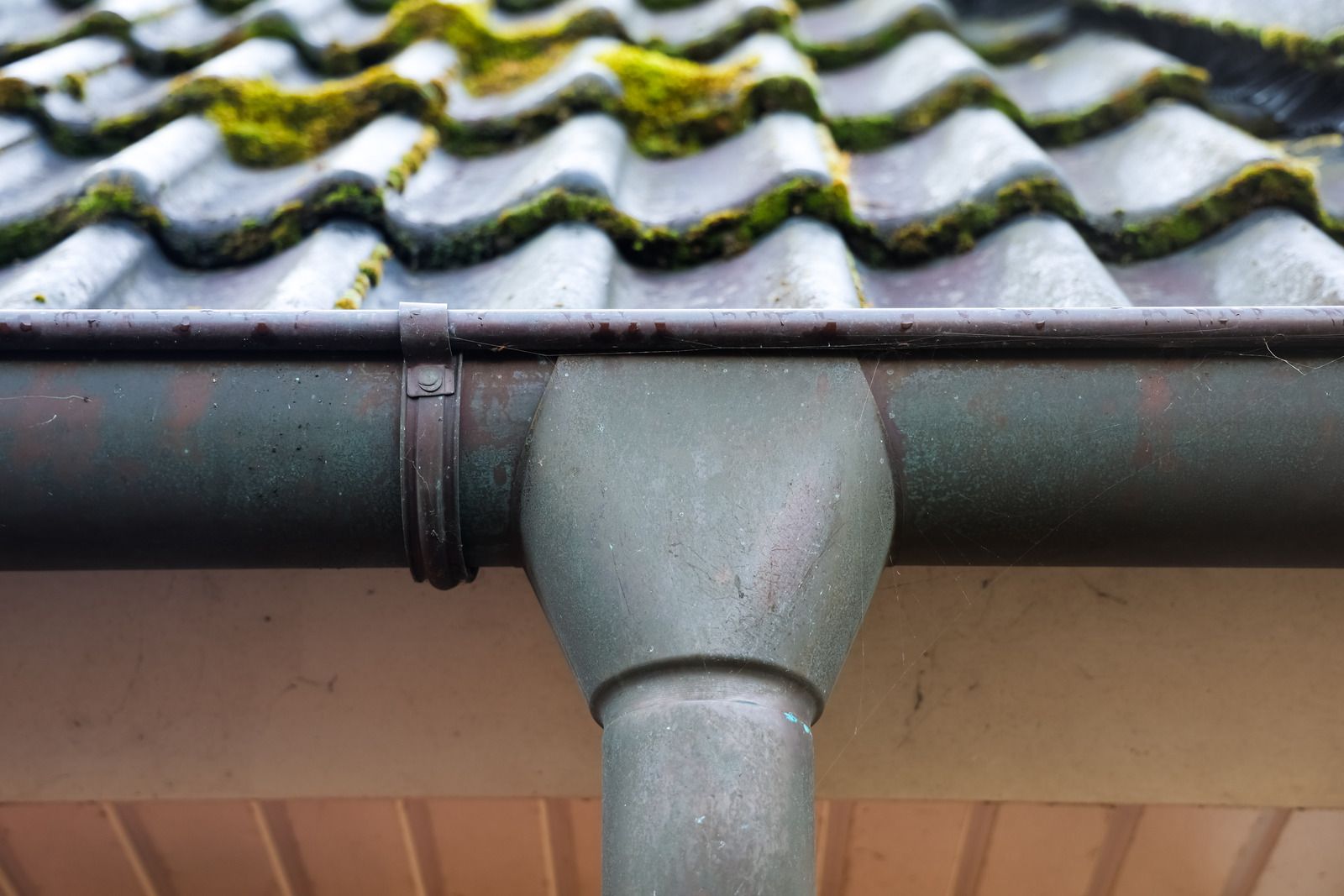
The point where a conservatory or orangery roof meets the main house is often a box gutter or narrow valley, and this is one of the most important areas to keep clear. These channels are narrower than a standard roof gutter and block far more easily with leaves, moss, and grit, particularly under mature trees. A blocked box gutter at this junction can send water backing up under flashing rather than away from the building, which is a common cause of damp patches appearing at the join between a conservatory and the main house.
Because this area sits low, in shade, and often close to overhanging branches, it tends to need checking more frequently than the open sections of a glass or polycarbonate roof.
6. Safe cleaning methods for glass and polycarbonate roofs
Soft washing, using low-pressure water combined with a gentle cleaning solution rather than a jet washer, is the standard safe approach for both glass and polycarbonate conservatory roofs. This method lifts dirt, algae, and light moss without the scratching risk that a pressure washer or stiff brush carries on these more delicate surfaces. Rinsing thoroughly afterwards is just as important as the cleaning step itself, since any residue left on glass or polycarbonate tends to show up as streaking once it dries.
Glazing bars, seals, and the box gutter at the base of the roof should be checked and cleared as part of the same visit, since a spotless roof panel does little good if debris is still trapped at the edges feeding moisture back towards the seals.
7. Signs your conservatory or orangery roof needs attention
- A visible haze or dulling on the glass: often the first sign of algae or a thin film of grime building up.
- Green or dark staining along glazing bars: moss or algae taking hold in the joints where panels meet.
- Debris visible in the box gutter or valley: leaves, moss, or grit collecting where the conservatory meets the main house.
- Reduced natural light inside the conservatory: a gradual sign that grime has built up more than it appears from a quick glance outside.
- Damp patches at the join with the main house: can indicate a blocked box gutter sending water in the wrong direction.
8. How often conservatory roofs in Tunbridge Wells typically need cleaning
Most conservatory and orangery roofs in the town benefit from a clean two to three times a year, more often where mature trees overhang the structure or where a main roof sits directly above and continually sheds debris onto it. This is a shorter cycle than a typical tiled roof, largely because grime on glass and polycarbonate is far more visible and directly affects the light and enjoyment of the space, even at a stage where a tiled roof further up might not yet need attention. Homes with a strong sense of kerb appeal often keep this cycle tight, as covered in our guide to kerb appeal for period homes in Tunbridge Wells, since a clean conservatory roof is often one of the more visible features of a well-kept property.
On period properties, where conservatories were added to complement the character of a Victorian or Edwardian villa, keeping the roof clean also protects the visual link between the addition and the original tile-hung or brick elevations. Our piece on cleaning Tunbridge Wells' Victorian roofs covers the wider context of maintaining these period features together.
Frequently Asked Questions
How often should a conservatory roof be cleaned in Tunbridge Wells?
Two to three times a year suits most conservatories, with more frequent attention needed where trees overhang the roof or a main roof section sits directly above it.
Is it safe to pressure wash a conservatory roof?
It is not recommended. Glass and polycarbonate can scratch or crack under high pressure, and seals can be damaged. A soft washing approach with low pressure and a gentle solution is the safer method.
Why does my conservatory roof get dirty faster than the rest of my roof?
Conservatory roofs are often shaded, sit beneath overhanging trees or the main roof, and their grime is simply more visible on a glass or light polycarbonate surface than on tiles.
Can moss actually grow on a glass or polycarbonate roof?
Moss itself struggles to root on smooth glass, but algae and grime build up readily, and moss washed down from a tiled roof above can sit and decompose on a conservatory roof even without rooting there directly.
What does conservatory roof cleaning in Tunbridge Wells typically cost?
Costs depend on the size and pitch of the roof, how accessible it is, and the extent of buildup present, so there is no single fixed figure. A local assessment gives the most accurate picture.
Do box gutters at the join with the house need clearing separately?
Yes. These narrow channels block more easily than standard guttering and are one of the most common causes of damp appearing at the join between a conservatory and the main house.
Conservatory roof looking dull?
Ben's Roof Cleaning has cleaned conservatory, orangery, and tiled roofs across Tunbridge Wells and the surrounding villages for over 15 years. Get in touch or call 0189 235 4214
for a free, no-obligation quote.
A clean conservatory roof lets a Tunbridge Wells home do what it was built for
A conservatory or orangery is meant to bring light and space into a home, and a dirty roof quietly undermines exactly that purpose long before it becomes obvious from the street. Between the tree cover surrounding Tunbridge Wells and the way debris from a main roof so often ends up on the glass below, these structures need their own gentle cleaning routine rather than being treated as an afterthought to the rest of the roof. Keeping glazing bars, box gutters, and roof panels clear protects both the seals and the light that makes a conservatory worth having in the first place.